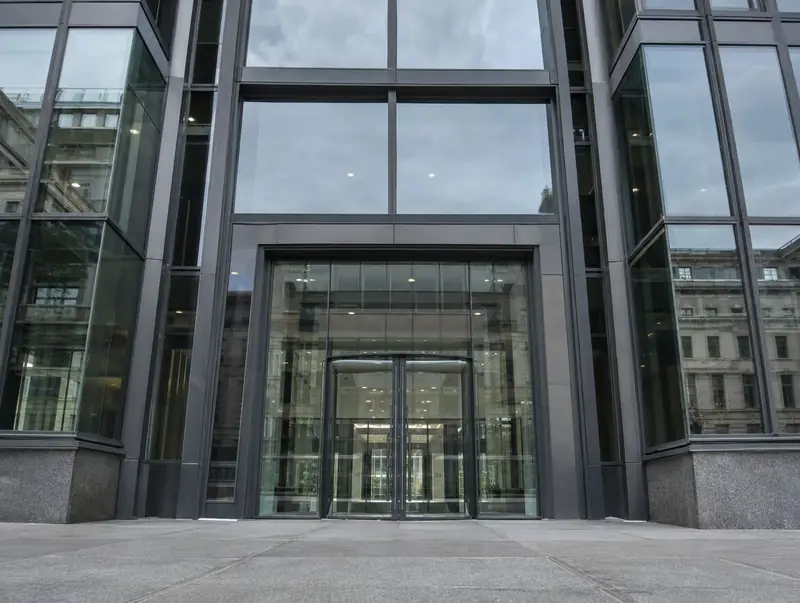
What should blast-resistant glazing cost in Greater London?
Budget £450 to £1,495 plus VAT (£540 to £1,794 inc VAT) per m² for blast-resistant glazing in Greater London, supplied and fitted. Larger panes, thicker makeups and difficult access cost more; the price is fixed in writing after the survey.
Blast-resistant glazing is laminated glass fitted in a frame and fixing system designed to stay in the opening, or fail safely, when hit by the pressure wave from an explosion. Its purpose is to stop glass becoming high-speed fragments, which cause most injuries in a blast, and it is designed from a threat assessment rather than chosen off the shelf.
Glass and fitting options
- Work planned from the threat assessment and engineer's design
- Deep-bite frames and structural silicone or mechanical retention
- Manufacturer's test evidence supplied with your quote
- Anti-shatter film with edge-retention systems for existing windows
- Sealed units with a laminated inner pane
- Glazing classed to BS EN 13541 or tested to ISO 16933 and 16934
Covering Greater London
We can arrange surveys and fitting anywhere in Greater London, including Central London and Islington. Dates depend on installer availability. Choose your town below for local details.
Greater London has every kind of glazing, from Georgian sashes and Victorian bays in conservation areas to high-street shopfronts, office curtain walling and new-build flats.
Good candidates for blast-resistant glazing:
- Government, council and civic buildings
- Embassies, courts and police premises
- Laboratories and industrial sites with process risks
- Offices in city centres and near potential targets
Towns in Greater London
- ActonW3
- ArchwayN19
- BarkingIG11
- BarnesSW13
- BarnetEN5
- BatterseaSW11
- BeckenhamBR3
- BecontreeRM9
- BexleyDA5
- BlackheathSE3
- BowE3
- BrixtonSW2
- Camden TownNW1
- Canary WharfE14
- Canning TownE16
- CarshaltonSM5
- CatfordSE6
- Central LondonEC1A
- Chalk FarmNW3
- ChelseaSW3
- ChingfordE4
- ChiswickW4
- CoulsdonCR5
- CricklewoodNW2
- CroydonCR0
- DagenhamRM10
- EdmontonN18
- ElthamSE9
- EnfieldEN1
- FelthamTW13
- FinchleyN3
- FulhamSW6
- GreenfordUB6
- GreenwichSE10
- HamptonTW12
- HanworthTW13
- HarrowHA1
- HayesUB3
- HestonTW5
- HighburyN5
- HollowayN7
- HornchurchRM11
- HounslowTW3
- IlfordIG1
- IsleworthTW7
- IslingtonN1
- KilburnNW6
- LeytonstoneE11
- MitchamCR4
- MordenSM4
- Muswell HillN10
- New MaldenKT3
- NortholtUB5
- Notting HillW11
- PeckhamSE15
- PimlicoSW1V
- PurleyCR8
- PutneySW15
- RichmondTW9
- RomfordRM1
- RuislipHA4
- Shepherds BushW12
- South CroydonCR2
- SouthallUB1
- Stamford HillN16
- StratfordE15
- StreathamSW16
- SurbitonKT5
- SuttonSM1
- ThamesmeadSE28
- TottenhamN17
- UxbridgeUB8
- WallingtonSM6
- WalthamstowE17
- WellingDA16
- WembleyHA0
- WillesdenNW10
- WimbledonSW19
- Wood GreenN22
- Woodford GreenIG8
Before the glass is ordered
Fragment hazard
Some designs accept that glass will break but keep it in place; others allow controlled failure into a catching system. Both aim to stop flying shards.
New glazing or retrofit
New facades can be designed as a full tested system. Existing buildings often get film with edge retention, internal secondary glazing or curtains instead.
Glazing rules in England
Glazing in workplaces
Regulation 14 of the Workplace (Health, Safety and Welfare) Regulations 1992 requires windows and transparent surfaces in walls, partitions, doors and gates to be of safety material or protected against breakage where health or safety makes that necessary, and to be marked so people notice them. The employer or the person in control of the premises decides what is needed through their risk assessment.
Fire-rated glass is different
Glass in fire doors, fire screens and protected escape routes has to be fire-rated glass tested as part of that door or screen system, under Approved Document B and the fire safety duties of the building's responsible person. Laminated and security glass are not fire-rated unless the product says so. Where a pane needs both fire and security performance, it must be a product tested for both.
How it works
- Postcode and a few photos
- On-site survey
- Fixed written price and lead time
- Fit, check and explain
Blast-resistant glazing in Greater London: questions
Which towns in Greater London do you cover?
We can arrange work anywhere in Greater London, including Central London, Islington, Bexley, Barking and Archway, and in other towns across the area.
Is blast film enough on its own?
Film helps hold glass together but works much better when the film is anchored to the frame so the whole pane cannot fly in. Plain film without retention offers less.
What does ER1 to ER4 mean?
They are explosion-pressure classes in BS EN 13541. Glass samples are tested in a shock tube, with higher classes meaning higher pressures. The class applies to the glass, so the frame must be designed to match.
Who decides what level of protection we need?
Your security adviser, insurer or a blast engineer, based on a threat and risk assessment. Government guidance from the National Protective Security Authority covers the approach.
Other glazing in Greater London
- Security secondary glazing
- Security glass for doors
- Glazing bead security upgrades
- Laminated roof and conservatory glass
- Toughened safety glass
- Display case security glass
Start with a guide price online, then we survey and fix the price in writing.