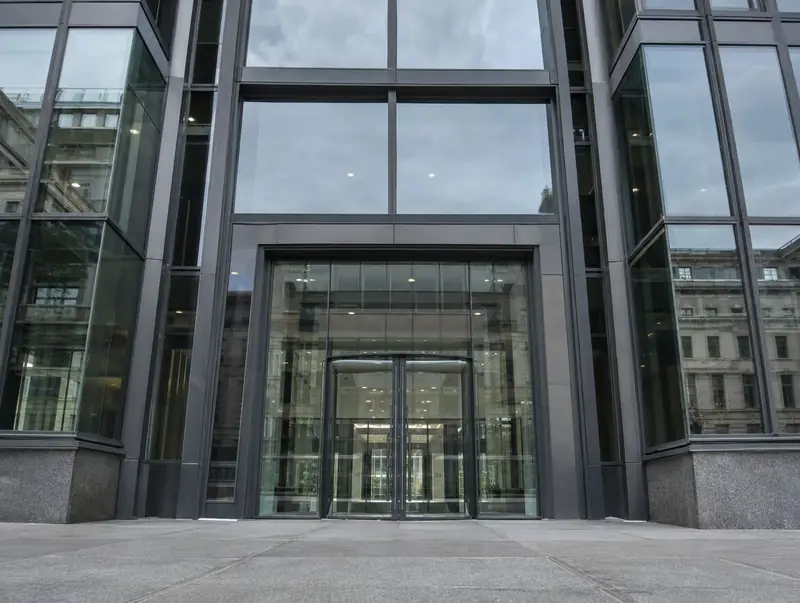
How much should I budget for blast-resistant glazing in Ruislip?
As a guide, allow £450 to £1,495 plus VAT (£540 to £1,794 inc VAT) per m² for blast-resistant glazing in Ruislip, supplied and fitted. Size, glass makeup, access and frame condition move the price, which is confirmed in writing after the free survey.
Blast-resistant glazing is laminated glass fitted in a frame and fixing system designed to stay in the opening, or fail safely, when hit by the pressure wave from an explosion. Its purpose is to stop glass becoming high-speed fragments, which cause most injuries in a blast, and it is designed from a threat assessment rather than chosen off the shelf.
Glass and fitting options
- Sealed units with a laminated inner pane
- Blast-resistant net curtains as a fragment-catching layer
- Laminated glass with thick or stiff interlayers
- Deep-bite frames and structural silicone or mechanical retention
- Anti-shatter film with edge-retention systems for existing windows
- Work planned from the threat assessment and engineer's design
Fitting in Ruislip and nearby
From the HA4 district we also cover Northolt (3 miles) and Uxbridge (3 miles). Survey dates depend on installer availability.
Greater London has every kind of glazing, from Georgian sashes and Victorian bays in conservation areas to high-street shopfronts, office curtain walling and new-build flats.
Common uses:
- Government, council and civic buildings
- Transport hubs, venues and stadium frontages
- Embassies, courts and police premises
- Laboratories and industrial sites with process risks
What to think about first
Fragment hazard
Some designs accept that glass will break but keep it in place; others allow controlled failure into a catching system. Both aim to stop flying shards.
Frame and fixings
The frame must hold the glass and the fixings must hold the frame. Upgrading glass alone can move the failure to the frame.
Consents and safety: England
Listed buildings and conservation areas
In England, listed building consent from the council may be needed to replace historic glass such as crown or cylinder glass, or to alter glazing bars, sashes and frames. Historic England publishes guidance on traditional windows. Secondary glazing and window film are often easier to agree because they can be removed later, but the council's conservation officer makes the decision.
Planning permission
Changing the glass in an existing window or shopfront does not usually need planning permission, because the building looks much the same afterwards. A new or altered shopfront, or security features added to the outside of a building, may need planning permission from the council. Bollards or barriers on the pavement need the highway authority's consent, which is normally the council.
How it works
- Postcode and a few photos
- On-site survey
- Fixed written price and lead time
- Fit, check and explain
Blast-resistant glazing in Ruislip: questions
Can you survey in Ruislip and nearby towns?
Yes. Surveys in Ruislip, Northolt and Uxbridge are booked around installer availability.
Who decides what level of protection we need?
Your security adviser, insurer or a blast engineer, based on a threat and risk assessment. Government guidance from the National Protective Security Authority covers the approach.
Can existing windows be made blast-resistant?
They can often be improved. Anti-shatter film with an edge-retention system, laminated replacement glass in strengthened frames or internal secondary glazing can cut the flying-glass hazard, depending on the threat.
Is blast film enough on its own?
Film helps hold glass together but works much better when the film is anchored to the frame so the whole pane cannot fly in. Plain film without retention offers less.
Blast-resistant glazing in nearby towns
Other glazing in Ruislip
- Misted unit replacement with laminated glass
- Security secondary glazing
- Laminated roof and conservatory glass
- Shopfront security glass
- Laminated security glass
- Commercial reglazing
Start with a guide price online, then we survey and fix the price in writing.