The short answer
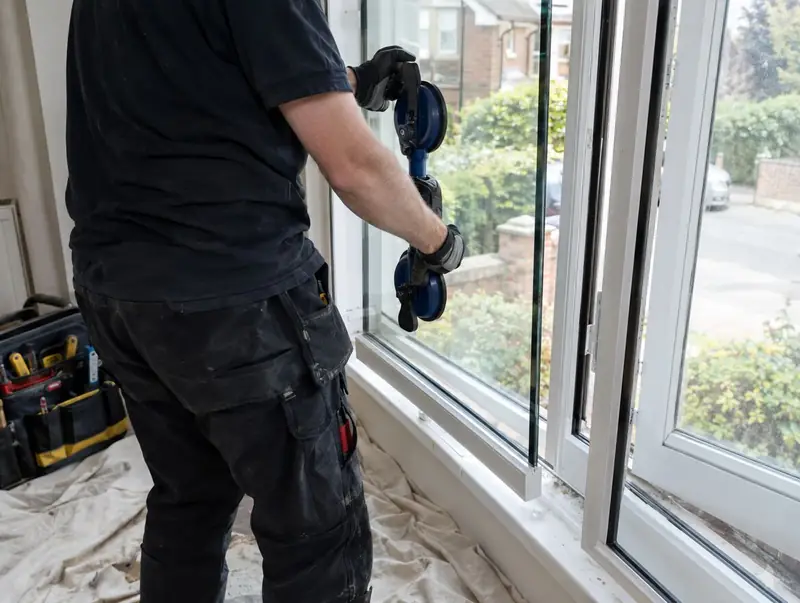
Usually not for glass alone. Replacing a broken or misted pane or sealed unit in an existing frame is generally treated as a repair rather than notifiable building work. Replacing a whole window, door or frame is different: in England and Wales it must be done by a registered competent person scheme installer or approved through building control.
When is glass-only work not notifiable?
Councils in England describe just replacing glass in an existing frame as exempt from building regulations approval. That covers swapping a broken pane, a misted sealed unit, or upgrading a pane to laminated or toughened glass while the frame stays in place.
When does the work become notifiable?
- Replacing a whole window, door or frame rather than just the glass
- Making a new opening or enlarging an existing one
- Replacing a shopfront or changing the structure around it
- Work that changes how a building meets fire safety rules, such as glazing in fire doors and screens
- New dwellings and conversions, where the full set of building rules applies
Does new glass still have to meet any standard?
Yes, in practice. Glass in a critical location, such as in or beside a door or below 800 mm, should be safety glass, and new glass should not make the building less safe than before. When we replace a sealed unit we normally match or improve its thermal performance, with low-emissivity glass and a warm-edge spacer, so the window is not made worse.
What about Wales, Scotland and Northern Ireland?
Wales applies building regulations to replacement windows and doors and has its own approved documents. Scotland runs a building warrant system with its own technical handbooks, and Northern Ireland has its own building regulations and technical booklets. In each, glass-only repairs in existing frames are generally straightforward, but if your project goes beyond the glass, check with the council's building control or building standards team before work starts.
Do listed buildings need consent to change glass?
They can. Historic glass is part of a listed building's character, so replacing it may need listed building consent even though building regulations do not apply. Our guide to security glazing for listed buildings covers the options that are usually acceptable.
What paperwork should I keep?
- The invoice describing the glass type, thickness and any rating
- The manufacturer's markings or test evidence for rated or safety glass
- Any consent or approval, if your work went beyond glass-only replacement
Sources
- Do I need Building Regulations approval to change my windows? (Warwick District Council)
- Approved Document K: protection from falling, collision and impact (GOV.UK)
- Building regulations guidance: doors and windows (GOV.WALES)
- Building Regulations technical booklets, including Technical Booklet V: glazing (Department of Finance NI)
This guide is general information, not legal advice. Rules differ between England, Wales, Scotland and Northern Ireland; check with your council, building control or insurer where it matters.
Add Security Glazing UK as a preferred source on Google
Related glass types
Broken or cracked panes made safe, measured and replaced, with the option to upgrade to laminated security glass.
from £174 per pane inc VATLearn moreFailed, misty double-glazed units replaced with new sealed units that have a laminated pane, keeping your existing frames.
from £150 inc VATLearn moreUpgrading the glass in existing windows, doors and screens to laminated security glass without replacing the frames.
from £174 inc VATLearn moreReplacing damaged, failed or unsafe glass in offices, shops and public buildings, including large panes needing lifting equipment.
from £395 + VATLearn more