The short answer
Security film is a lower-cost way to hold broken glass together and slow a smash-and-grab on panes you already have. Laminated glass gives a higher, tested level of resistance and lasts as long as the window. Film suits large areas, short-term needs and glass that is hard to replace; laminated suits doors, ground-floor windows and anything an insurer specifies.
How does security film work?
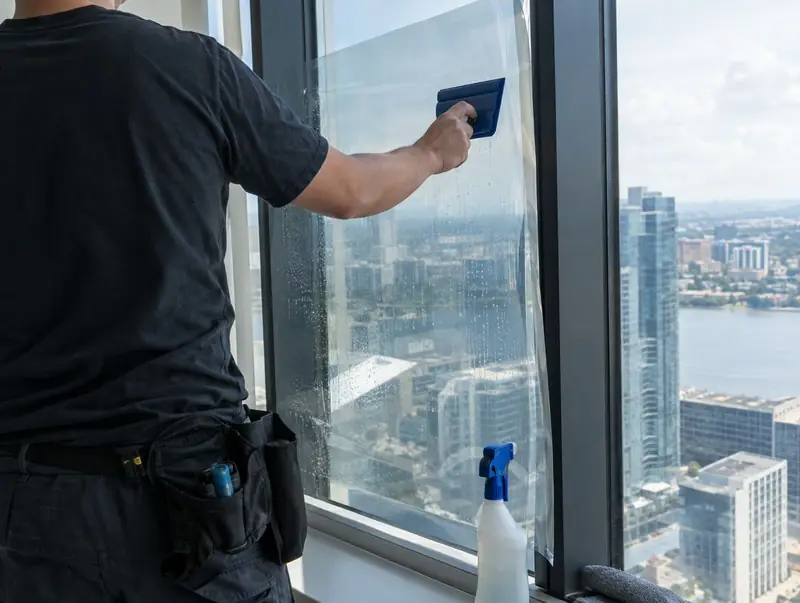
Security film is a clear polyester film, typically 100 to 350 microns thick, applied to the inside face of the glass with a strong adhesive. If the glass breaks, the film holds the fragments together so the pane does not fall into the room.
On its own the film stops at the edge of the glass. Edge-retention systems anchor the film to the frame with a bead or sealant so the whole filmed pane is less likely to be pushed out. That makes a real difference for blast mitigation and against a determined attack.
How do they compare in a break-in?
Laminated glass is made with the interlayer built in and can be tested and classed under BS EN 356, from P1A upwards. Film adds resistance to an existing pane, and some film systems have test evidence for low BS EN 356 classes on specific glass, but the result depends on the glass it is applied to. If you need a stated rating, laminated glass is the clearer route; if film is chosen, ask for evidence that matches your glass.
How do the costs compare?
Security film costs £45 to £110 plus VAT (£54 to £132 inc VAT) per m² fitted, with a minimum job charge of £295 plus VAT (£354 inc VAT). Laminated glass costs £145 to £495 plus VAT (£174 to £594 inc VAT) per pane, or £145 to £495 plus VAT (£174 to £594 inc VAT) per security double-glazed unit. Film is usually cheaper for large areas of glass; laminated is better value where only a few panes matter most.
How long does each last?
Laminated glass lasts as long as the pane. Film has a finite life: it is usually replaced after a number of years, sooner on glass that takes strong sun. Film can also be scratched by cleaning, so it suits glass that is cleaned with care.
When does each make sense?
- Film: large office or school glazing where replacing every pane is not practical
- Film: blast mitigation alongside a security adviser's recommendations
- Film: a quick, reversible improvement in a rented or listed building, subject to consent
- Laminated: doors, door side panels and ground-floor windows
- Laminated: shopfronts and anywhere an insurer names a BS EN 356 class
- Laminated: replacing broken or misted glass, when the new pane can be upgraded at little extra cost
Can film go on any glass?
Not always. Some combinations of film and glass absorb enough heat in sunlight to put the glass at risk of thermal stress cracking, particularly large tinted panes and some sealed units. The installer checks the glass type and the film maker's compatibility guidance before recommending film.
Sources
- Measures to improve the blast resistance of glazing (National Protective Security Authority)
- Workplace (Health, Safety and Welfare) Regulations 1992, regulation 14 (legislation.gov.uk)
- BS EN 356:2000 Glass in building. Security glazing. Resistance against manual attack (BSI)
This guide is general information, not legal advice. Rules differ between England, Wales, Scotland and Northern Ireland; check with your council, building control or insurer where it matters.
Add Security Glazing UK as a preferred source on Google
Related glass types
Clear polyester film applied to the inside of existing glass so a broken pane holds together and is slower to get through.
from £54 per m² inc VAT, min. job £354Learn moreTwo or more sheets of glass bonded with a tough interlayer, so a broken pane stays in the frame instead of falling out.
from £174 inc VATLearn moreUpgrading the glass in existing windows, doors and screens to laminated security glass without replacing the frames.
from £174 inc VATLearn moreLaminated glass, retention systems and frames designed to hold together under explosion pressure and cut flying-glass injuries.
from £450 + VATLearn more