The short answer
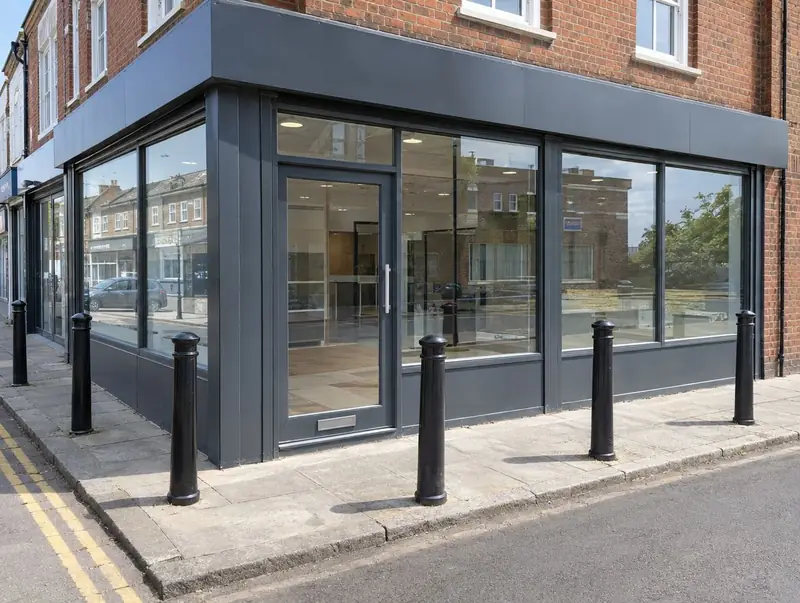
Glass cannot stop a vehicle. Anti-bandit laminated glass in a strengthened frame delays entry after an impact and keeps the opening closed for longer, but stopping a vehicle needs bollards, barriers or other street furniture outside the shopfront, designed and installed as a separate job.
What happens in a ram raid?
A vehicle is driven or reversed into a shopfront, cash machine area or loading door to make an opening, usually at night, and goods are taken in a few minutes. The aim is speed, so anything that adds time and effort after the impact reduces what can be taken.
What can security glazing do?
Laminated anti-bandit glass, typically P6B to P8B under BS EN 356, cracks under impact but stays bonded to its interlayer, so it does not fall away to leave a clean gap. Set in a frame strengthened with steel reinforcement, deeper rebates and fixings into solid structure, it makes the opening slower and harder to clear.
That is the honest limit: the glazing delays entry and limits the size of the opening. A vehicle with enough mass and speed will still damage glass and frame.
What actually stops a vehicle?
Vehicle security barriers such as bollards, planters and rails are designed to absorb the impact of a vehicle of a given mass and speed. Products are tested to recognised vehicle security barrier standards, such as PAS 68 and ISO 22343. They need proper foundations, a check for underground services, and often consent: anything on a public pavement needs the highway authority's agreement, and planning permission may also be needed. We specify bollards and barriers with a specialist contractor and price them separately from the glazing.
How do the two work together?
Bollards stop or slow the vehicle; the glazing and frame make whatever reaches the shopfront harder to get through. Alarms, CCTV and removing high-value stock from the window overnight add to both. For many shops the right answer is a mix, chosen from how the building sits on the street and what has happened before.
What does anti-ram-raid glazing cost?
Our guide range for anti-ram-raid glazing is £1,495 to £6,995 plus VAT (£1,794 to £8,394 inc VAT) per shopfront for the glass and frame work, depending on width, rating and how much the frame needs strengthening. Bollards and barriers are priced separately once their design and any consents are known.
What should I check before deciding?
- Whether the pavement in front is public highway or part of your property
- What the building and landlord will allow on the shopfront and pavement
- Your insurer's requirements, if any, for glazing or barriers
- Where services run under the pavement before any bollard is planned
- How deliveries, bins and accessible access will still work
Sources
- Measures to improve the blast resistance of glazing (National Protective Security Authority)
- Planning permission: doors and windows (Planning Portal)
- Crime prevention advice (police.uk)
This guide is general information, not legal advice. Rules differ between England, Wales, Scotland and Northern Ireland; check with your council, building control or insurer where it matters.
Add Security Glazing UK as a preferred source on Google
Related glass types
Heavy laminated glass in strengthened frames to delay entry after a vehicle impact, planned alongside bollards that stop the vehicle.
from £1,495 + VATLearn moreThick multi-layer laminated glass tested against hammer and axe attack to P6B, P7B or P8B for high-value shops and cash areas.
from £450 + VATLearn moreLarge laminated and anti-bandit panes for shop windows and entrances, fitted so the shop stays on show but is slow to break into.
from £595 + VATLearn moreReplacing damaged, failed or unsafe glass in offices, shops and public buildings, including large panes needing lifting equipment.
from £395 + VATLearn more