The short answer
BS EN 1063 classifies bullet-resistant glass by the firearm and ammunition it stopped in testing: BR1 to BR4 cover small-calibre and handgun rounds, BR5 to BR7 cover rifles, and SG1 and SG2 cover shotguns. An NS rating means no glass splinters came off the protected side. The class you need comes from a threat assessment, not a guess.
What do the BR classes mean?
Each class is defined by a reference weapon and bullet fired from a set distance. Higher classes include heavier and faster rounds:
- BR1: .22 calibre long rifle
- BR2: 9 mm handgun
- BR3: .357 Magnum handgun
- BR4: .44 Magnum handgun
- BR5: 5.56 mm rifle
- BR6: 7.62 mm rifle
- BR7: 7.62 mm rifle with steel-core ammunition
- SG1 and SG2: shotgun, single and multiple shots
What is the difference between S and NS?
Every class has an S or NS suffix. NS means no splinters came off the back face of the glass during the test, so people standing behind it are protected from flying fragments. S means splinters may come off the protected face. Where people work close behind the glass, such as at a counter, NS glass is the usual choice.
Why is bullet-resistant glass so thick and heavy?
Resistance comes from layers of glass and interlayer, often with a polycarbonate layer on the protected face to catch splinters. Thickness and weight climb with the class: handgun-rated glass is already much thicker than ordinary laminated glass, and rifle-rated glass is commonly several centimetres thick and very heavy. Frames, counters and floors have to be able to carry that weight, which the survey checks.
Does the frame need the same rating?
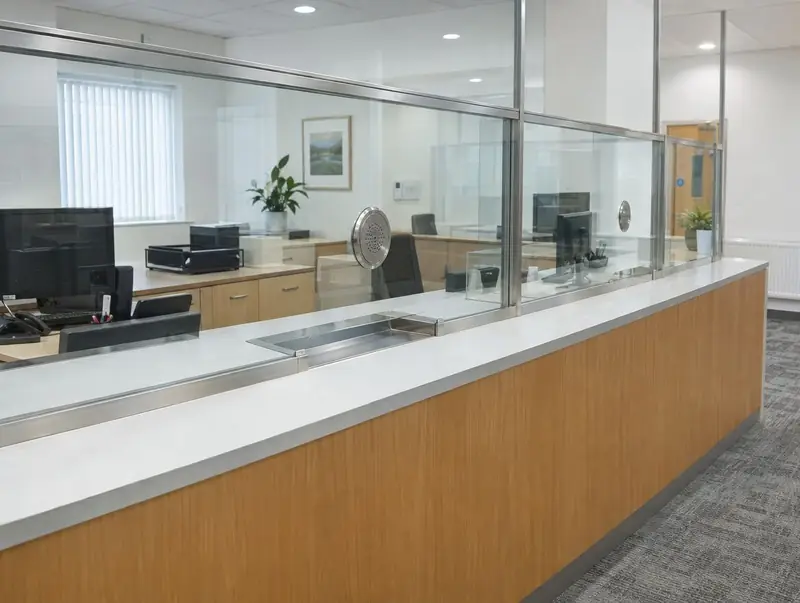
Yes. A rated pane in an unrated frame leaves weak points around the edges, speech gaps and transaction trays. Complete windows and doors are classified separately under BS EN 1522 as FB1 to FB7, and framing, speech panels and deal trays should match the rating of the glass. We quote matched systems from manufacturers who have tested them.
Who needs bullet-resistant glazing?
- Bank, building society and post office counters
- Cash centres and bureaux de change
- Night-pay windows at petrol stations and late shops
- Gatehouses, control rooms and reception points at sensitive sites
- Premises where a security adviser or insurer has identified a firearms risk
How is the right class chosen?
The class comes from a threat assessment by you, your security adviser or your insurer, sometimes drawing on guidance from the National Protective Security Authority. Tell us the class required, or the advice you have been given, and we will quote glass and framing tested to that class by the manufacturer, with their test evidence supplied with your quote. Guide prices are £995 to £2,995 plus VAT (£1,194 to £3,594 inc VAT) per m², supplied and fitted into a frame that can take the glass; new or upgraded framing is priced at survey.
Sources
- BS EN 1063: security glazing, resistance against bullet attack (BSI Knowledge)
- Measures to improve the blast resistance of glazing (National Protective Security Authority)
This guide is general information, not legal advice. Rules differ between England, Wales, Scotland and Northern Ireland; check with your council, building control or insurer where it matters.
Add Security Glazing UK as a preferred source on Google
Related glass types
Thick laminated glass and polycarbonate composites tested to BS EN 1063 for counters, kiosks and secure rooms.
from £995 + VATLearn moreGlazed screens with speech panels and transaction trays for counters, reception desks and cash points, built to a level set by risk.
from £1,295 + VATLearn moreSecure glazing and transaction drawers for night-pay windows, ticket booths, gatehouses and car park kiosks.
from £995 + VATLearn moreHeavy-duty aluminium or steel glazed doorsets and side screens with laminated glass and multi-point locking for entrances.
from £1,495 + VATLearn more