Security secondary glazing in Croydon: what will it cost?
Expect £594 to £1,794 including VAT (£495 to £1,495 plus VAT) per window for security secondary glazing in Croydon. The written quote names the glass makeup, the price and the lead time before you commit.
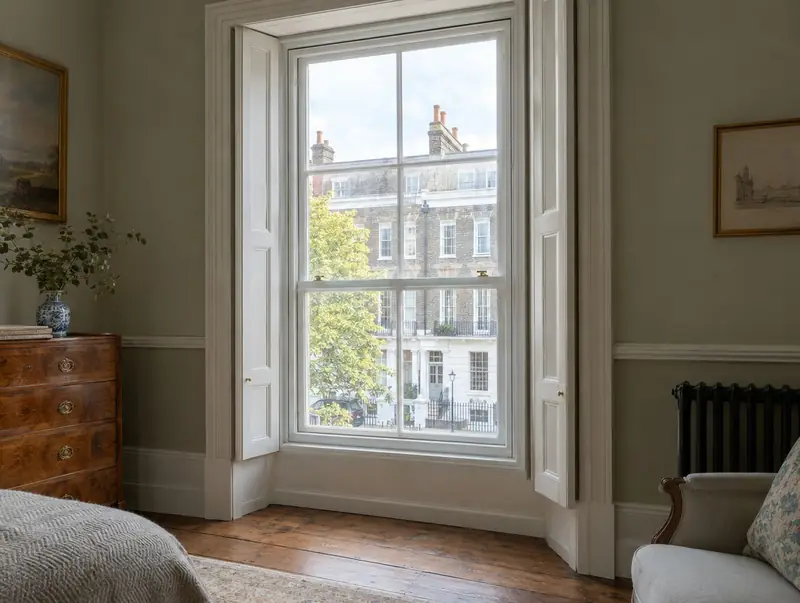
Security secondary glazing is a separate slim window fitted on the room side of an existing window, glazed with laminated glass so it forms a second barrier. It leaves the original window untouched outside, which makes it a common choice for listed buildings, conservation areas and period sash windows.
What goes into security secondary glazing
- Suits sash, casement and arched openings
- Low-E glass for better insulation
- Fixed within the reveal, leaving the original window untouched
- Locks and catches that open from inside without a key
- Noise and draught reduction
- Laminated glass in slim aluminium frames
Fitting in Croydon and nearby
Surveys in Croydon (CR0) are booked around installer availability. We also cover nearby South Croydon (1 mile), Wallington (3 miles) and Carshalton (3 miles).
Greater London has every kind of glazing, from Georgian sashes and Victorian bays in conservation areas to high-street shopfronts, office curtain walling and new-build flats.
Typical settings for security secondary glazing:
- Ground-floor flats in converted townhouses
- Listed homes and buildings in conservation areas
- Homes on busy roads wanting noise reduction
- Period sash windows with original glass
Getting the right glass for your building
Escape and ventilation
On windows used for escape, the secondary glazing must open quickly from inside without a key or tool.
How it opens
Match the opening style to the original window so both can be opened, cleaned and used for ventilation.
What the rules say in England
Listed buildings and conservation areas
In England, listed building consent from the council may be needed to replace historic glass such as crown or cylinder glass, or to alter glazing bars, sashes and frames. Historic England publishes guidance on traditional windows. Secondary glazing and window film are often easier to agree because they can be removed later, but the council's conservation officer makes the decision.
Windows needed for escape
Approved Document B expects many habitable rooms in houses, particularly upstairs, to have an escape window with a clear opening of at least 0.33 m², at least 450 mm high and 450 mm wide, with the bottom of the opening no more than 1,100 mm above the floor. Changing the glass does not alter that, but locks, secondary glazing and film must not stop the window opening. Laminated glass is hard to break through, so escape always relies on the window opening.
How it works
- Guide price online or by phone
- Survey in Croydon
- Accept the fixed quote
- Fitted by glaziers working under our contract
Security secondary glazing in Croydon: questions
Can you survey in Croydon and nearby towns?
Yes. Surveys in Croydon, South Croydon and Wallington are booked around installer availability.
Will secondary glazing cause condensation?
A well-fitted unit usually reduces condensation on the inner pane. Some ventilation of the gap may be needed, which we discuss at the survey.
Does secondary glazing reduce noise?
Yes, often noticeably, because of the air gap between the two panes. Laminated glass helps further.
Can I still open my sash windows?
Yes. Secondary glazing slides, hinges or lifts out so the original window can be opened and cleaned.
Security secondary glazing in nearby towns
Other glazing in Croydon
- Patio and bifold door security glass
- Anti-ram-raid glazing
- Toughened safety glass
- Commercial reglazing
- Glazing bead security upgrades
- Security glass for home windows
Tell us about the glazing and we will come back with a guide price.