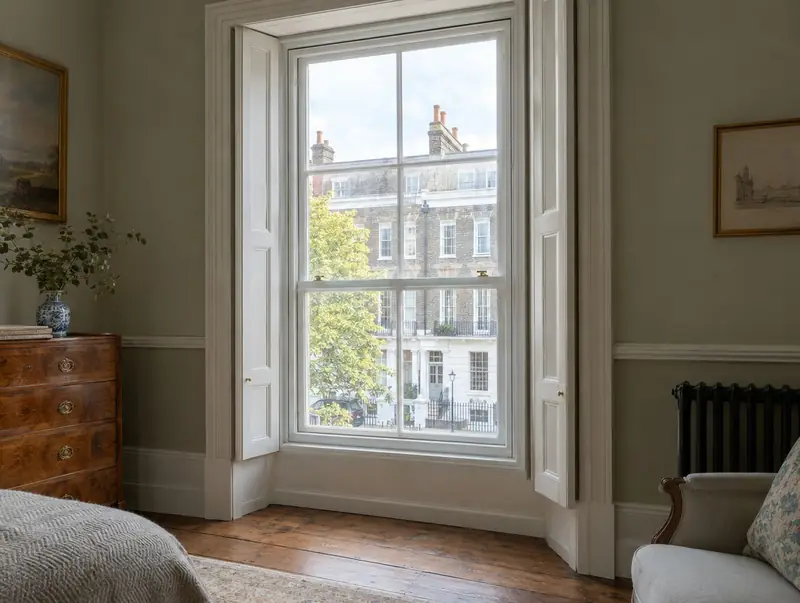
What is security secondary glazing?
Security secondary glazing is a separate slim window fitted on the room side of an existing window, glazed with laminated glass so it forms a second barrier. It leaves the original window untouched outside, which makes it a common choice for listed buildings, conservation areas and period sash windows.
With secondary glazing, someone who breaks the outer window still faces a second, laminated pane in its own frame, locked from inside. It also cuts draughts and noise and can improve thermal performance a great deal, because of the air gap between the two windows. The original timber sashes, crown glass and joinery stay as they are.
Units are made to measure in slim aluminium frames and open by sliding, hinging or lifting out so the original window can still be cleaned and opened. That matters for safety: if a window is relied on for escape, the secondary glazing must open easily from inside without a key. In listed buildings internal secondary glazing usually has far less impact than replacing the windows, but listed building consent can still be needed, so we suggest talking to the council's conservation officer early.
How much does security secondary glazing cost?
Our guide range is £594 to £1,794 including VAT (£495 to £1,495 plus VAT) per window, supplied and fitted. The exact figure depends on size, glass makeup, frame condition and access, and your fixed price is confirmed in writing after the free survey. See all glass prices.
Specification and options
- Laminated glass in slim aluminium frames
- Vertical sliding, horizontal sliding, hinged and lift-out styles
- Colour-matched frames to suit the room
- Fixed within the reveal, leaving the original window untouched
- Locks and catches that open from inside without a key
- Noise and draught reduction
- Low-E glass for better insulation
- Suits sash, casement and arched openings
Where security secondary glazing is used
- Listed homes and buildings in conservation areas
- Period sash windows with original glass
- Ground-floor flats in converted townhouses
- Homes on busy roads wanting noise reduction
- Offices in historic buildings
What to decide before you order
How it opens
Match the opening style to the original window so both can be opened, cleaned and used for ventilation.
Escape and ventilation
On windows used for escape, the secondary glazing must open quickly from inside without a key or tool.
Listed building consent
Internal secondary glazing is usually seen as reversible, but consent can still be needed. Check with the conservation officer first.
Frame colour and sightlines
Slim frames that line up with the existing meeting rails make the secondary glazing almost invisible from outside.
Rules across the UK
Safety glazing, building regulations, planning and listed building rules differ between England, Wales, Scotland and Northern Ireland. These are the points most relevant to security secondary glazing; local pages show the version for your nation.
Listed buildings and conservation areas
In England, listed building consent from the council may be needed to replace historic glass such as crown or cylinder glass, or to alter glazing bars, sashes and frames. Historic England publishes guidance on traditional windows. Secondary glazing and window film are often easier to agree because they can be removed later, but the council's conservation officer makes the decision.
Windows needed for escape
Approved Document B expects many habitable rooms in houses, particularly upstairs, to have an escape window with a clear opening of at least 0.33 m², at least 450 mm high and 450 mm wide, with the bottom of the opening no more than 1,100 mm above the floor. Changing the glass does not alter that, but locks, secondary glazing and film must not stop the window opening. Laminated glass is hard to break through, so escape always relies on the window opening.
Planning permission
Changing the glass in an existing window or shopfront does not usually need planning permission, because the building looks much the same afterwards. A new or altered shopfront, or security features added to the outside of a building, may need planning permission from the council. Bollards or barriers on the pavement need the highway authority's consent, which is normally the council.
How it works
Tell us what needs securing
Use the guide price tool or form, or call. Pane sizes and a few photos help us give a guide figure straight away.
Free survey
A surveyor measures each pane, checks the existing glass, frame and beads, and talks through the rating that suits the risk.
Fixed price in writing
You get a written quote listing each pane, the glass type and class, the price and the lead time. Nothing is ordered until you accept.
Made to measure and fitted
Glass is made to order and fitted by glaziers working under our contract with you, then cleaned, checked and explained.
Security secondary glazing: questions
How much does security secondary glazing cost?
Most security secondary glazing costs from £495 to £1,495 plus VAT (£594 to £1,794 inc VAT) per window supplied and fitted, depending on size, shape and opening style. Your fixed price follows a free survey.
Do I need permission for secondary glazing in a listed building?
It depends on the building and the council. Internal secondary glazing usually has less impact than replacement windows, but listed building consent may still be needed. Ask the conservation officer before ordering.
Can I still open my sash windows?
Yes. Secondary glazing slides, hinges or lifts out so the original window can be opened and cleaned.
Does secondary glazing reduce noise?
Yes, often noticeably, because of the air gap between the two panes. Laminated glass helps further.
Is secondary glazing safe for escape windows?
It can be, as long as it opens quickly from inside without a key. We design catches and handles for that.
Will secondary glazing cause condensation?
A well-fitted unit usually reduces condensation on the inner pane. Some ventilation of the gap may be needed, which we discuss at the survey.
Find security secondary glazing near you
Choose your county or region for local information and the rules that apply where you are.
England
- Bedfordshire
- Berkshire
- Bristol
- Buckinghamshire
- Cambridgeshire
- Cheshire
- Cornwall
- Cumbria
- Derbyshire
- Devon
- Dorset
- Durham
- East Riding of Yorkshire
- East Sussex
- Essex
- Gloucestershire
- Greater London
- Greater Manchester
- Hampshire
- Herefordshire
- Hertfordshire
- Isle of Wight
- Kent
- Lancashire
- Leicestershire
- Lincolnshire
- Merseyside
- Norfolk
- North Yorkshire
- Northamptonshire
- Northumberland
- Nottinghamshire
- Oxfordshire
- Rutland
- Shropshire
- Somerset
- South Yorkshire
- Staffordshire
- Suffolk
- Surrey
- Tyne and Wear
- Warwickshire
- West Midlands
- West Sussex
- West Yorkshire
- Wiltshire
- Worcestershire
Wales
Scotland
- Aberdeen, Aberdeenshire and Moray
- Highland
- Dundee and Angus
- Perth and Kinross
- Fife
- Edinburgh and the Lothians
- Forth Valley
- Glasgow and Clyde
- Lanarkshire
- Ayrshire
- Argyll and Bute
- Dumfries and Galloway
- Scottish Borders
- Orkney, Shetland and the Western Isles