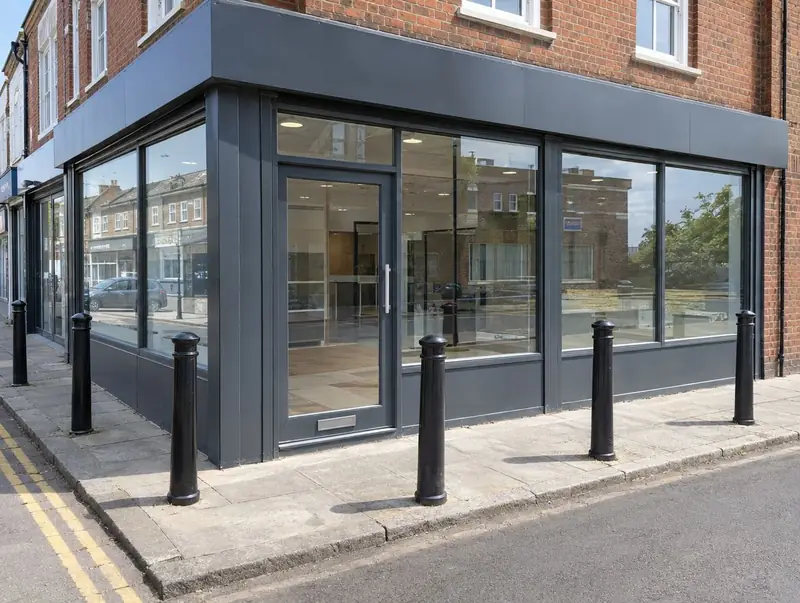
Anti-ram-raid glazing in Hove: what will it cost?
Expect £1,495 to £6,995 plus VAT (£1,794 to £8,394 inc VAT) per shopfront for anti-ram-raid glazing in Hove. The written quote names the glass makeup, the price and the lead time before you commit.
Anti-ram-raid glazing is heavy laminated or anti-bandit glass fitted in strengthened, deeply rebated frames so that, if a vehicle or heavy tool hits the shopfront, the opening is not simply cleared. Glass and frames delay entry; stopping the vehicle itself needs bollards, posts or barriers in front of the shop.
Specification at a glance
- Deep glazing rebates and bonded or mechanical glass retention
- Steel-reinforced or heavy-section framing
- Stallriser and threshold strengthening
- Fixings designed back to the structure
- Anti-bandit glass in P6B to P8B classes
- Advice on bollards and barriers, priced separately
Fitting in Hove and nearby
Whether you are in central Hove or at the edge of the BN3 district, we can arrange a survey. Nearby Brighton and Portslade are covered too.
East Sussex mixes the Regency bow-fronted terraces and busy shopping lanes of Brighton and Hove with Victorian seafronts in Eastbourne and Hastings and historic Lewes and Rye.
Typical settings for anti-ram-raid glazing:
- Jewellers and pawnbrokers
- Convenience stores with cash machines inside
- Shops on corners or with open forecourts
- Phone, electronics and tobacco retailers
Getting the right glass for your building
Insurer requirements
Insurers often set conditions after a raid. Get their wording before ordering so the scheme meets it.
Stop the vehicle or delay entry
Bollards and barriers stop vehicles; glass and frames delay entry afterwards. Most sites need both, and we explain which layer does what.
What the rules say in England
Planning permission
Changing the glass in an existing window or shopfront does not usually need planning permission, because the building looks much the same afterwards. A new or altered shopfront, or security features added to the outside of a building, may need planning permission from the council. Bollards or barriers on the pavement need the highway authority's consent, which is normally the council.
Insurer requirements
Insurers set their own conditions for shops, offices, stock and cash, and some name a glazing class such as BS EN 356 P6B in the policy wording. Ask for that wording in writing before you order. The insurer decides whether the glass meets their policy; we provide the glass manufacturer's test evidence with the quote.
How it works
- Tell us about the glazing
- Survey, measuring and frame check
- Written quote naming the glass
- Fitting and handover
Anti-ram-raid glazing in Hove: questions
Do you cover Brighton as well as Hove?
Yes. As well as Hove, we can arrange surveys in nearby Brighton, Portslade and Burgess Hill. Dates depend on installer availability.
Can glass stop a ram raid?
No. Glass cannot stop a vehicle. Strong laminated glass in a strengthened frame delays entry after impact; bollards or barriers are what stop the vehicle reaching the glass.
Should I move stock away from the window?
Yes. Keeping high-value stock away from the glass at night reduces the reward and complements the physical measures.
Do I need permission for bollards outside my shop?
Usually. Bollards on a public pavement need the highway authority's agreement, and forecourt barriers or new shopfront framing may need planning permission. We tell you what to check.
Anti-ram-raid glazing in nearby towns
- Brighton1 mile
- Portslade2 miles
- Burgess Hill9 miles
- Worthing9 miles
- Haywards Heath12 miles
- Seaford12 miles
Other glazing in Hove
- Safety glazing for schools and public buildings
- Security secondary glazing
- Patio and bifold door security glass
- Broken glass replacement
- Security window film
- Kiosk and booth security glazing
Get a guide price now and book your free survey in Hove.