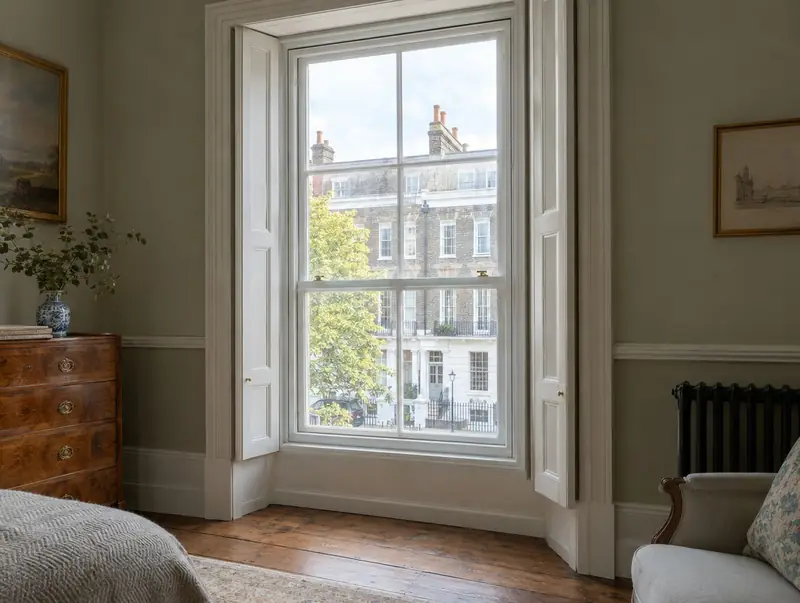
Security secondary glazing in Bury St Edmunds: what will it cost?
As a guide, allow £594 to £1,794 including VAT (£495 to £1,495 plus VAT) per window for security secondary glazing in Bury St Edmunds, supplied and fitted. Size, glass makeup, access and frame condition move the price, which is confirmed in writing after the free survey.
Security secondary glazing is a separate slim window fitted on the room side of an existing window, glazed with laminated glass so it forms a second barrier. It leaves the original window untouched outside, which makes it a common choice for listed buildings, conservation areas and period sash windows.
Options for security secondary glazing in Bury St Edmunds
- Fixed within the reveal, leaving the original window untouched
- Low-E glass for better insulation
- Laminated glass in slim aluminium frames
- Colour-matched frames to suit the room
- Locks and catches that open from inside without a key
- Vertical sliding, horizontal sliding, hinged and lift-out styles
Fitting in Bury St Edmunds and nearby
Bury St Edmunds is about 23 miles from Ipswich, the main centre for Suffolk. We can survey and fit across the IP32 district and in nearby places such as Thetford and Stowmarket.
Suffolk ranges from Ipswich's waterfront offices and town-centre shops to timber-framed and Georgian streets in Bury St Edmunds, Lavenham and Woodbridge, and coastal Lowestoft and Felixstowe.
Typical settings for security secondary glazing:
- Homes on busy roads wanting noise reduction
- Listed homes and buildings in conservation areas
- Period sash windows with original glass
- Ground-floor flats in converted townhouses
Getting the right glass for your building
Listed building consent
Internal secondary glazing is usually seen as reversible, but consent can still be needed. Check with the conservation officer first.
Frame colour and sightlines
Slim frames that line up with the existing meeting rails make the secondary glazing almost invisible from outside.
What the rules say in England
Planning permission
Changing the glass in an existing window or shopfront does not usually need planning permission, because the building looks much the same afterwards. A new or altered shopfront, or security features added to the outside of a building, may need planning permission from the council. Bollards or barriers on the pavement need the highway authority's consent, which is normally the council.
Listed buildings and conservation areas
In England, listed building consent from the council may be needed to replace historic glass such as crown or cylinder glass, or to alter glazing bars, sashes and frames. Historic England publishes guidance on traditional windows. Secondary glazing and window film are often easier to agree because they can be removed later, but the council's conservation officer makes the decision.
How it works
- Postcode and a few photos
- On-site survey
- Fixed written price and lead time
- Fit, check and explain
Security secondary glazing in Bury St Edmunds: questions
Which areas near Bury St Edmunds do you cover?
We can arrange work in Bury St Edmunds and in nearby Thetford (12 miles), Stowmarket (13 miles) and Newmarket (13 miles). Dates depend on installer availability.
Can I still open my sash windows?
Yes. Secondary glazing slides, hinges or lifts out so the original window can be opened and cleaned.
Does secondary glazing reduce noise?
Yes, often noticeably, because of the air gap between the two panes. Laminated glass helps further.
Will secondary glazing cause condensation?
A well-fitted unit usually reduces condensation on the inner pane. Some ventilation of the gap may be needed, which we discuss at the survey.
Security secondary glazing in nearby towns
Other glazing in Bury St Edmunds
- Patio and bifold door security glass
- Glazing bead security upgrades
- Kiosk and booth security glazing
- Counter and reception security screens
- Anti-ram-raid glazing
- Toughened safety glass
Start with a guide price online, then we survey and fix the price in writing.