Security secondary glazing in Barking: what will it cost?
Our guide range for security secondary glazing in Barking is £594 to £1,794 including VAT (£495 to £1,495 plus VAT) per window, including fitting. The survey is free for new installations and your fixed price follows in writing.
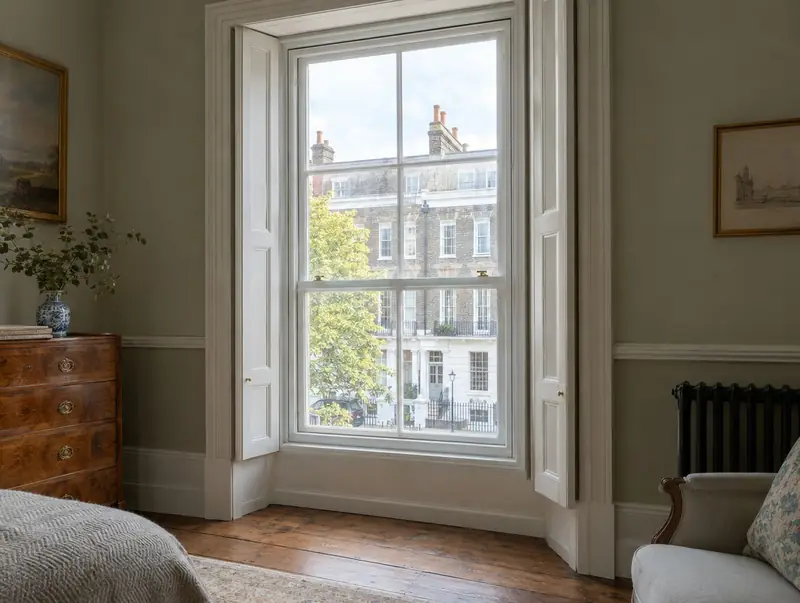
Security secondary glazing is a separate slim window fitted on the room side of an existing window, glazed with laminated glass so it forms a second barrier. It leaves the original window untouched outside, which makes it a common choice for listed buildings, conservation areas and period sash windows.
What goes into security secondary glazing
- Colour-matched frames to suit the room
- Laminated glass in slim aluminium frames
- Locks and catches that open from inside without a key
- Low-E glass for better insulation
- Suits sash, casement and arched openings
- Vertical sliding, horizontal sliding, hinged and lift-out styles
Fitting in Barking and nearby
Surveys in Barking (IG11) are booked around installer availability. We also cover nearby Ilford (2 miles), Becontree (2 miles) and Thamesmead (3 miles).
Greater London has every kind of glazing, from Georgian sashes and Victorian bays in conservation areas to high-street shopfronts, office curtain walling and new-build flats.
Typical settings for security secondary glazing:
- Ground-floor flats in converted townhouses
- Listed homes and buildings in conservation areas
- Offices in historic buildings
- Period sash windows with original glass
Getting the right glass for your building
Escape and ventilation
On windows used for escape, the secondary glazing must open quickly from inside without a key or tool.
Frame colour and sightlines
Slim frames that line up with the existing meeting rails make the secondary glazing almost invisible from outside.
What the rules say in England
Windows needed for escape
Approved Document B expects many habitable rooms in houses, particularly upstairs, to have an escape window with a clear opening of at least 0.33 m², at least 450 mm high and 450 mm wide, with the bottom of the opening no more than 1,100 mm above the floor. Changing the glass does not alter that, but locks, secondary glazing and film must not stop the window opening. Laminated glass is hard to break through, so escape always relies on the window opening.
Planning permission
Changing the glass in an existing window or shopfront does not usually need planning permission, because the building looks much the same afterwards. A new or altered shopfront, or security features added to the outside of a building, may need planning permission from the council. Bollards or barriers on the pavement need the highway authority's consent, which is normally the council.
How it works
- Send sizes or use the quote tool
- Free survey at your Barking address
- Fixed price in writing
- Glass made, then fitted
Security secondary glazing in Barking: questions
Can you survey in Barking and nearby towns?
Yes. Surveys in Barking, Ilford and Becontree are booked around installer availability.
Do I need permission for secondary glazing in a listed building?
It depends on the building and the council. Internal secondary glazing usually has less impact than replacement windows, but listed building consent may still be needed. Ask the conservation officer before ordering.
Does secondary glazing reduce noise?
Yes, often noticeably, because of the air gap between the two panes. Laminated glass helps further.
Is secondary glazing safe for escape windows?
It can be, as long as it opens quickly from inside without a key. We design catches and handles for that.
Security secondary glazing in nearby towns
Other glazing in Barking
- Commercial reglazing
- Laminated roof and conservatory glass
- Security glazed doors and screens
- Misted unit replacement with laminated glass
- Glazing bead security upgrades
- Anti-ram-raid glazing
Ready for a price? Use the form or call 0800 088 6248.