What should security secondary glazing cost in Cheltenham?
Typical prices for security secondary glazing in Cheltenham are £594 to £1,794 including VAT (£495 to £1,495 plus VAT) per window, supplied and fitted. Use the quote tool for a guide figure, then we survey and confirm a fixed price.
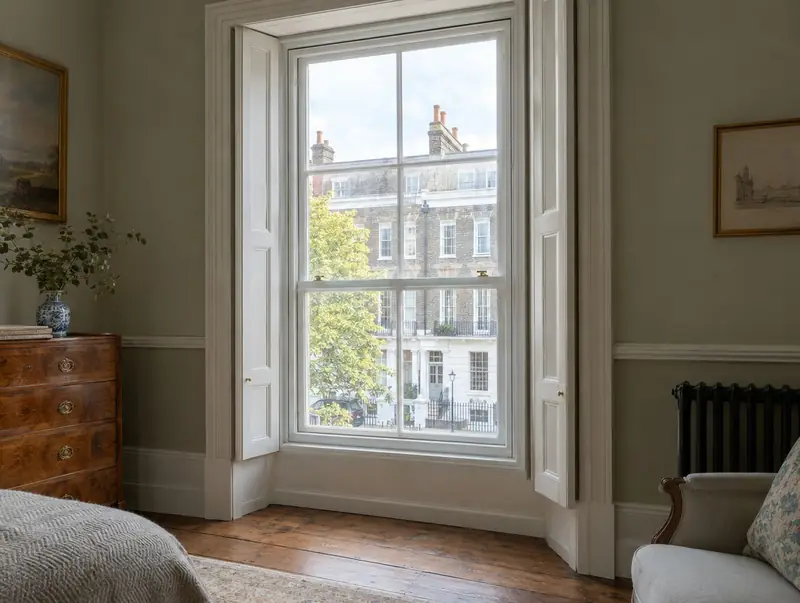
Security secondary glazing is a separate slim window fitted on the room side of an existing window, glazed with laminated glass so it forms a second barrier. It leaves the original window untouched outside, which makes it a common choice for listed buildings, conservation areas and period sash windows.
Glass and fitting options
- Fixed within the reveal, leaving the original window untouched
- Noise and draught reduction
- Colour-matched frames to suit the room
- Laminated glass in slim aluminium frames
- Locks and catches that open from inside without a key
- Low-E glass for better insulation
Fitting in Cheltenham and nearby
From the GL50 district we also cover Tewkesbury (7 miles) and Gloucester (7 miles). Survey dates depend on installer availability.
Gloucestershire pairs Cheltenham's Regency terraces and shopping promenades with Gloucester's docks and city centre, and Cotswold-stone towns where conservation areas shape window changes.
Good candidates for security secondary glazing:
- Period sash windows with original glass
- Homes on busy roads wanting noise reduction
- Offices in historic buildings
- Ground-floor flats in converted townhouses
Before the glass is ordered
Escape and ventilation
On windows used for escape, the secondary glazing must open quickly from inside without a key or tool.
Listed building consent
Internal secondary glazing is usually seen as reversible, but consent can still be needed. Check with the conservation officer first.
Glazing rules in England
Replacing glass in an existing frame
Replacing only the glass or sealed unit in an existing frame is generally treated as a repair in England rather than notifiable building work. Replacing a whole window or door is notifiable and is normally certified through a competent person scheme or approved by building control. Either way, new glass in a critical location should still be safety glass.
Windows needed for escape
Approved Document B expects many habitable rooms in houses, particularly upstairs, to have an escape window with a clear opening of at least 0.33 m², at least 450 mm high and 450 mm wide, with the bottom of the opening no more than 1,100 mm above the floor. Changing the glass does not alter that, but locks, secondary glazing and film must not stop the window opening. Laminated glass is hard to break through, so escape always relies on the window opening.
How it works
- Postcode and a few photos
- On-site survey
- Fixed written price and lead time
- Fit, check and explain
Security secondary glazing in Cheltenham: questions
Can you survey in Cheltenham and nearby towns?
Yes. Surveys in Cheltenham, Tewkesbury and Gloucester are booked around installer availability.
Will secondary glazing cause condensation?
A well-fitted unit usually reduces condensation on the inner pane. Some ventilation of the gap may be needed, which we discuss at the survey.
Does secondary glazing reduce noise?
Yes, often noticeably, because of the air gap between the two panes. Laminated glass helps further.
Do I need permission for secondary glazing in a listed building?
It depends on the building and the council. Internal secondary glazing usually has less impact than replacement windows, but listed building consent may still be needed. Ask the conservation officer before ordering.
Security secondary glazing in nearby towns
Other glazing in Cheltenham
- Glazing bead security upgrades
- Security glass for home windows
- Bullet-resistant glass
- Misted unit replacement with laminated glass
- Commercial reglazing
- Toughened safety glass
Start with a guide price online, then we survey and fix the price in writing.