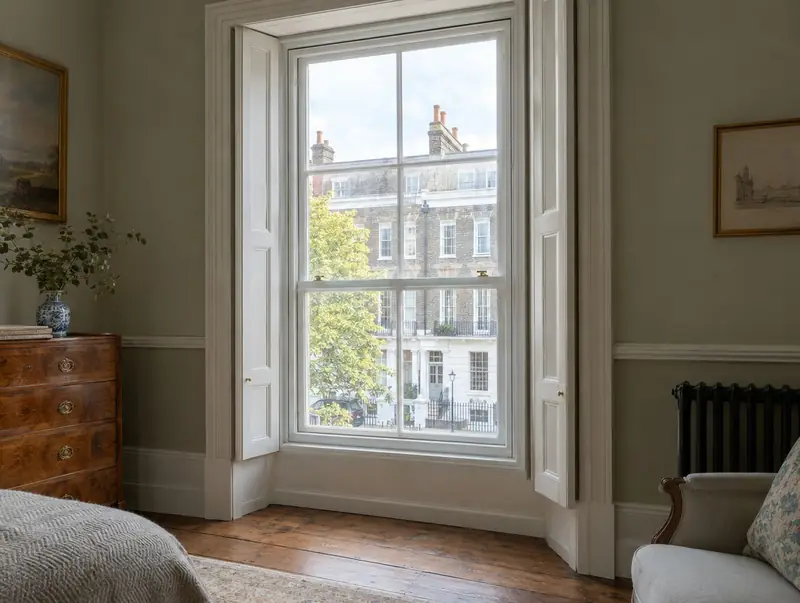
What should security secondary glazing cost in Cambridgeshire?
Budget £594 to £1,794 including VAT (£495 to £1,495 plus VAT) per window for security secondary glazing in Cambridgeshire, supplied and fitted. Larger panes, thicker makeups and difficult access cost more; the price is fixed in writing after the survey.
Security secondary glazing is a separate slim window fitted on the room side of an existing window, glazed with laminated glass so it forms a second barrier. It leaves the original window untouched outside, which makes it a common choice for listed buildings, conservation areas and period sash windows.
Specification at a glance
- Fixed within the reveal, leaving the original window untouched
- Noise and draught reduction
- Low-E glass for better insulation
- Laminated glass in slim aluminium frames
- Colour-matched frames to suit the room
- Suits sash, casement and arched openings
Covering Cambridgeshire
We can arrange surveys and fitting anywhere in Cambridgeshire, including Peterborough and Cambridge. Dates depend on installer availability. Choose your town below for local details.
Cambridgeshire has listed college streets and shopfronts in Cambridge and Ely, Peterborough's Victorian terraces and modern retail, and science-park offices with large glazed facades.
Good candidates for security secondary glazing:
- Listed homes and buildings in conservation areas
- Period sash windows with original glass
- Ground-floor flats in converted townhouses
- Homes on busy roads wanting noise reduction
Towns in Cambridgeshire
Before the glass is ordered
Frame colour and sightlines
Slim frames that line up with the existing meeting rails make the secondary glazing almost invisible from outside.
Escape and ventilation
On windows used for escape, the secondary glazing must open quickly from inside without a key or tool.
Glazing rules in England
Listed buildings and conservation areas
In England, listed building consent from the council may be needed to replace historic glass such as crown or cylinder glass, or to alter glazing bars, sashes and frames. Historic England publishes guidance on traditional windows. Secondary glazing and window film are often easier to agree because they can be removed later, but the council's conservation officer makes the decision.
Planning permission
Changing the glass in an existing window or shopfront does not usually need planning permission, because the building looks much the same afterwards. A new or altered shopfront, or security features added to the outside of a building, may need planning permission from the council. Bollards or barriers on the pavement need the highway authority's consent, which is normally the council.
How it works
- Tell us about the glazing
- Survey, measuring and frame check
- Written quote naming the glass
- Fitting and handover
Security secondary glazing in Cambridgeshire: questions
Which towns in Cambridgeshire do you cover?
We can arrange work anywhere in Cambridgeshire, including Peterborough, Cambridge, Wisbech, St Neots and Huntingdon, and in other towns across the area.
Can I still open my sash windows?
Yes. Secondary glazing slides, hinges or lifts out so the original window can be opened and cleaned.
Will secondary glazing cause condensation?
A well-fitted unit usually reduces condensation on the inner pane. Some ventilation of the gap may be needed, which we discuss at the survey.
Do I need permission for secondary glazing in a listed building?
It depends on the building and the council. Internal secondary glazing usually has less impact than replacement windows, but listed building consent may still be needed. Ask the conservation officer before ordering.
Other glazing in Cambridgeshire
- Counter and reception security screens
- Security glazed doors and screens
- Broken glass replacement
- Shopfront security glass
- Laminated security glass
- Safety glazing for schools and public buildings
Get a guide price now and book your free survey in Cambridgeshire.