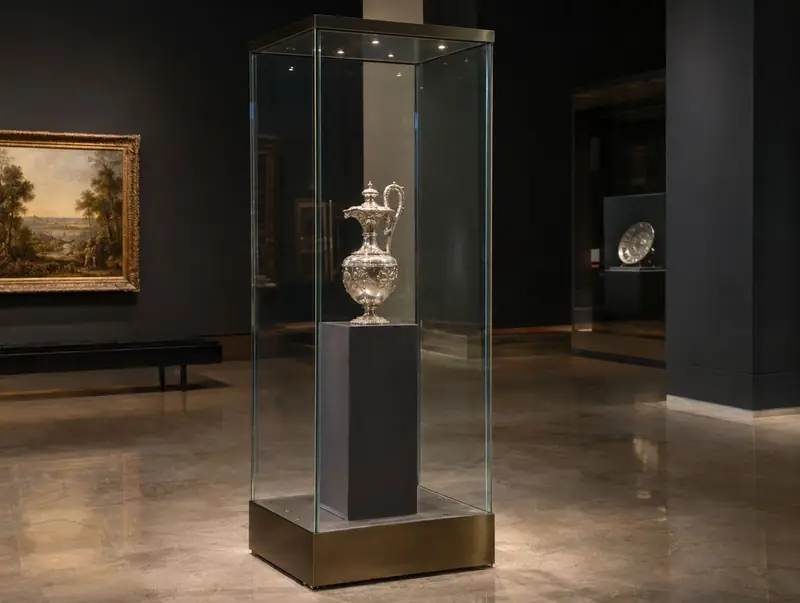
What is display case security glass?
Display case security glass is laminated glass, usually low-iron for clarity, fitted to counters, cabinets and freestanding cases so that items can be seen but not reached when the glass is struck. It is used by jewellers, museums, galleries and any business that keeps valuable items on open display.
Many cases and counters were made with toughened or plain glass, which either shatters away or leaves sharp edges and an open case. Laminated glass holds together, so a quick snatch becomes slow and obvious. For cases holding high-value items, thicker laminates in the P4A or higher classes are used, along with stronger locks and glass that is bonded or held in a retaining frame.
Display glass also has to look perfect. Low-iron glass removes the green tint, anti-reflective coatings cut glare under spotlights, and polished or bonded edges keep the case looking clean. We measure each case, check the frame and locks, and either reglaze the existing case or advise if a new case would serve better. Museum and gallery work can include liaison with conservators on materials that come into contact with objects.
How much does display case security glass cost?
Our guide range is £195 to £995 plus VAT (£234 to £1,194 inc VAT) per case, supplied and fitted. The exact figure depends on size, glass makeup, frame condition and access, and your fixed price is confirmed in writing after the free survey. See all glass prices.
Specification and options
- Laminated glass in P1A to P5A classes
- Low-iron glass for true colour
- Anti-reflective coatings for spotlit cases
- Polished and bonded edges
- Reglazing of existing counters and cabinets
- Lock and hinge upgrades
- Freestanding and wall case panels
- Manufacturer's test evidence supplied with your quote
Where display case security glass is used
- Jewellery and watch counters
- Museum and gallery cases
- Pharmacy and tobacco display units
- Trophy and collection cabinets
- Showroom display counters
What to decide before you order
Reglaze or replace
Sound cases can be reglazed with laminated glass. Light or worn cases may be better replaced.
Clarity
Low-iron and anti-reflective glass make a real difference under display lighting.
Locks and hinges
Strong glass behind a weak lock is no upgrade. We check and upgrade locks at the same time.
Insurer conditions
Insurers may set conditions for high-value items. Share their wording so the case meets it.
Rules across the UK
Safety glazing, building regulations, planning and listed building rules differ between England, Wales, Scotland and Northern Ireland. These are the points most relevant to display case security glass; local pages show the version for your nation.
Insurer requirements
Insurers set their own conditions for shops, offices, stock and cash, and some name a glazing class such as BS EN 356 P6B in the policy wording. Ask for that wording in writing before you order. The insurer decides whether the glass meets their policy; we provide the glass manufacturer's test evidence with the quote.
Glazing in workplaces
Regulation 14 of the Workplace (Health, Safety and Welfare) Regulations 1992 requires windows and transparent surfaces in walls, partitions, doors and gates to be of safety material or protected against breakage where health or safety makes that necessary, and to be marked so people notice them. The employer or the person in control of the premises decides what is needed through their risk assessment.
Listed buildings and conservation areas
In England, listed building consent from the council may be needed to replace historic glass such as crown or cylinder glass, or to alter glazing bars, sashes and frames. Historic England publishes guidance on traditional windows. Secondary glazing and window film are often easier to agree because they can be removed later, but the council's conservation officer makes the decision.
How it works
Tell us what needs securing
Use the guide price tool or form, or call. Pane sizes and a few photos help us give a guide figure straight away.
Free survey
A surveyor measures each pane, checks the existing glass, frame and beads, and talks through the rating that suits the risk.
Fixed price in writing
You get a written quote listing each pane, the glass type and class, the price and the lead time. Nothing is ordered until you accept.
Made to measure and fitted
Glass is made to order and fitted by glaziers working under our contract with you, then cleaned, checked and explained.
Display case security glass: questions
How much does display case security glass cost?
Display case glass usually costs from £195 to £995 plus VAT (£234 to £1,194 inc VAT) per case supplied and fitted, depending on size, number of panels and glass type. Your fixed price follows a free survey.
What glass is best for a jewellery counter?
Laminated glass, usually low-iron for clarity and at least P2A, with thicker classes for high-value stock. The lock and frame need to match.
Can you reglaze our existing display cases?
Usually. We measure each panel and fit laminated glass to the existing case if the frame and fixings are sound.
Does anti-reflective glass make a difference?
Under spotlights, yes. It reduces reflections so items can be seen clearly from more angles.
Can you work in a museum or gallery?
Yes. We plan the work with your team, protect the space and agree any materials that may come near objects.
Will laminated glass cut UV on displayed items?
Laminated glass blocks most UV light, which helps reduce fading of fabrics, papers and labels.
Find display case security glass near you
Choose your county or region for local information and the rules that apply where you are.
England
- Bedfordshire
- Berkshire
- Bristol
- Buckinghamshire
- Cambridgeshire
- Cheshire
- Cornwall
- Cumbria
- Derbyshire
- Devon
- Dorset
- Durham
- East Riding of Yorkshire
- East Sussex
- Essex
- Gloucestershire
- Greater London
- Greater Manchester
- Hampshire
- Herefordshire
- Hertfordshire
- Isle of Wight
- Kent
- Lancashire
- Leicestershire
- Lincolnshire
- Merseyside
- Norfolk
- North Yorkshire
- Northamptonshire
- Northumberland
- Nottinghamshire
- Oxfordshire
- Rutland
- Shropshire
- Somerset
- South Yorkshire
- Staffordshire
- Suffolk
- Surrey
- Tyne and Wear
- Warwickshire
- West Midlands
- West Sussex
- West Yorkshire
- Wiltshire
- Worcestershire
Wales
Scotland
- Aberdeen, Aberdeenshire and Moray
- Highland
- Dundee and Angus
- Perth and Kinross
- Fife
- Edinburgh and the Lothians
- Forth Valley
- Glasgow and Clyde
- Lanarkshire
- Ayrshire
- Argyll and Bute
- Dumfries and Galloway
- Scottish Borders
- Orkney, Shetland and the Western Isles