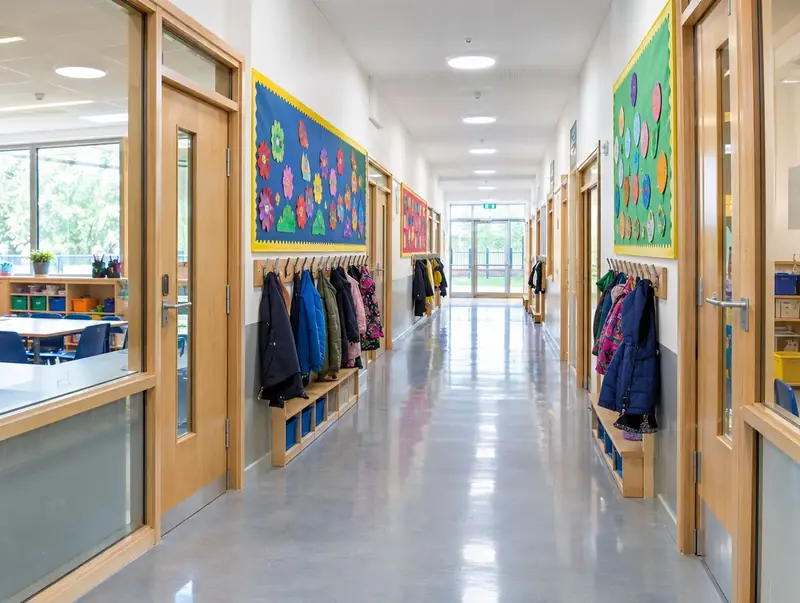
Safety glazing for schools and public buildings in Cowes: what will it cost?
As a guide, safety glazing for schools and public buildings costs £95 to £345 plus VAT (£114 to £414 inc VAT) per pane. Because work in Cowes is arranged individually, we confirm the full price, including any travel, in writing first.
Safety glazing for schools and public buildings means finding glass in critical locations, such as doors, side panels and low-level panes, that would break dangerously, and replacing it with toughened or laminated safety glass or protecting it with safety film. It helps duty holders meet workplace and building safety rules where children, staff and visitors move around.
What goes into safety glazing for schools and public buildings
- Manifestation markings on large clear panes
- Laminated glass for vision panels and corridors
- Work in holidays and outside hours
- Pane-by-pane survey and schedule of critical locations
- Toughened and laminated replacement glass
- Clear records for your estate files
Fitting in Cowes
Work in Cowes (PO31) is arranged individually. Send your postcode, sizes and a photo, and we will confirm what is possible and when.
The Isle of Wight's Victorian seaside towns such as Ryde, Sandown and Ventnor sit alongside Newport's shopping streets and Cowes' waterfront, with every glass delivery crossing by ferry.
Typical settings for safety glazing for schools and public buildings:
- Nurseries and early-years settings
- Colleges and community halls
- Offices with older internal glazing
- Primary and secondary schools
Getting the right glass for your building
Manifestation
Large clear panes need markings at eye level so people do not walk into them.
Replace or film
Replacement suits panes in poor frames or high-risk positions. Film is a quick, lower-cost way to protect sound glass in good frames.
What the rules say in England
Safety glass in critical locations
In England, section 5 of Approved Document K treats glazing in doors and in side panels within 300 mm of a door edge, from floor level up to 1,500 mm, and any other glazing below 800 mm, as a critical location. Glass there should break safely, be robust, or be guarded. Laminated or toughened glass meeting BS EN 12600 class 3 is the usual answer, rising to class 2 for door and side-panel panes wider than 900 mm.
Listed buildings and conservation areas
In England, listed building consent from the council may be needed to replace historic glass such as crown or cylinder glass, or to alter glazing bars, sashes and frames. Historic England publishes guidance on traditional windows. Secondary glazing and window film are often easier to agree because they can be removed later, but the council's conservation officer makes the decision.
How it works
- Send sizes, photos and your postcode
- We confirm what is possible and when
- Fixed price in writing
- Glass made, delivered and fitted
Safety glazing for schools and public buildings in Cowes: questions
Can you work in Cowes?
Work in Cowes is arranged individually because of travel. Send your postcode and details and we will confirm what is possible.
Can you replace glass in fire doors?
Often, yes, using the fire-rated glass and glazing system named in the door's certification or test evidence; some doors need a certificated fire-door installer, which we check first. Fire door glass must never be replaced with ordinary safety or security glass.
Is wired glass safety glass?
Not usually. Ordinary wired glass is not a safety glass and can break into sharp pieces in impact positions. Some wired glass is used for fire resistance, which is a different job.
Do we have to replace all the old glass?
Not necessarily. The duty is to make glass safe where needed. That may mean replacement, film or guarding, depending on the pane and the risk.
Safety glazing for schools and public buildings in nearby towns
Other glazing in Cowes
- Anti-bandit glass
- Blast-resistant glazing
- Broken glass replacement
- Security secondary glazing
- Laminated roof and conservatory glass
- Bullet-resistant glass
Send sizes and photos with the form, or call 0800 088 6248.