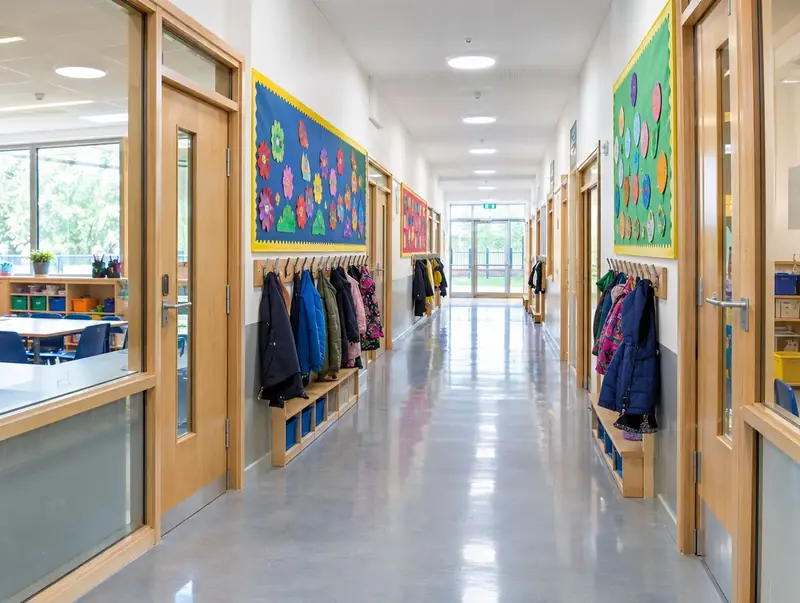
What is the price of safety glazing for schools and public buildings in Plymouth?
Our guide range for safety glazing for schools and public buildings is £95 to £345 plus VAT (£114 to £414 inc VAT) per pane, supplied and fitted. Work in Plymouth is arranged individually, so travel and glass delivery are confirmed in your written price before anything is booked.
Safety glazing for schools and public buildings means finding glass in critical locations, such as doors, side panels and low-level panes, that would break dangerously, and replacing it with toughened or laminated safety glass or protecting it with safety film. It helps duty holders meet workplace and building safety rules where children, staff and visitors move around.
Specification at a glance
- Manifestation markings on large clear panes
- Safety film for glass that can stay
- Clear records for your estate files
- Toughened and laminated replacement glass
- Laminated glass for vision panels and corridors
- Work in holidays and outside hours
Fitting in Plymouth
Surveys and fitting in Plymouth are arranged case by case because of travel and glass delivery. Tell us about the job and we will come back with options.
Devon spans Exeter's Georgian and post-war centre, Plymouth's rebuilt 1950s shopping streets and waterfront offices, and seaside towns where sea air is hard on window frames and seals.
This glazing suits:
- Nurseries and early-years settings
- Offices with older internal glazing
- Primary and secondary schools
- Libraries, leisure centres and council buildings
Questions we will ask at the survey
Prioritising
Start with doors, side panels and low-level glass in busy areas, then work outwards. The schedule makes it easy to phase.
Fire-rated panes
Glass in fire doors and screens must stay fire-rated. We use the fire-rated glass and glazing system named in the door or screen's certification or test evidence, never plain laminated glass, and some doors need a certificated fire-door installer.
Building regulations and safety in England
Listed buildings and conservation areas
In England, listed building consent from the council may be needed to replace historic glass such as crown or cylinder glass, or to alter glazing bars, sashes and frames. Historic England publishes guidance on traditional windows. Secondary glazing and window film are often easier to agree because they can be removed later, but the council's conservation officer makes the decision.
Glazing in workplaces
Regulation 14 of the Workplace (Health, Safety and Welfare) Regulations 1992 requires windows and transparent surfaces in walls, partitions, doors and gates to be of safety material or protected against breakage where health or safety makes that necessary, and to be marked so people notice them. The employer or the person in control of the premises decides what is needed through their risk assessment.
How it works
- Send sizes, photos and your postcode
- We confirm what is possible and when
- Fixed price in writing
- Glass made, delivered and fitted
Safety glazing for schools and public buildings in Plymouth: questions
Can you work in Plymouth?
Work in Plymouth is arranged individually because of travel. Send your postcode and details and we will confirm what is possible.
Do we have to replace all the old glass?
Not necessarily. The duty is to make glass safe where needed. That may mean replacement, film or guarding, depending on the pane and the risk.
What are critical locations?
Glazing in and beside doors up to 1,500 mm from the floor and other glazing below 800 mm, in the English guidance. Similar rules apply in Wales, Scotland and Northern Ireland.
Can you work during school holidays?
Yes. Most school glazing work is planned for holidays, weekends or after hours.
Other glazing in Plymouth
- Patio and bifold door security glass
- Commercial reglazing
- Misted unit replacement with laminated glass
- Anti-ram-raid glazing
- Glazing bead security upgrades
- Security double-glazed units
Send sizes and photos with the form, or call 0800 088 6248.