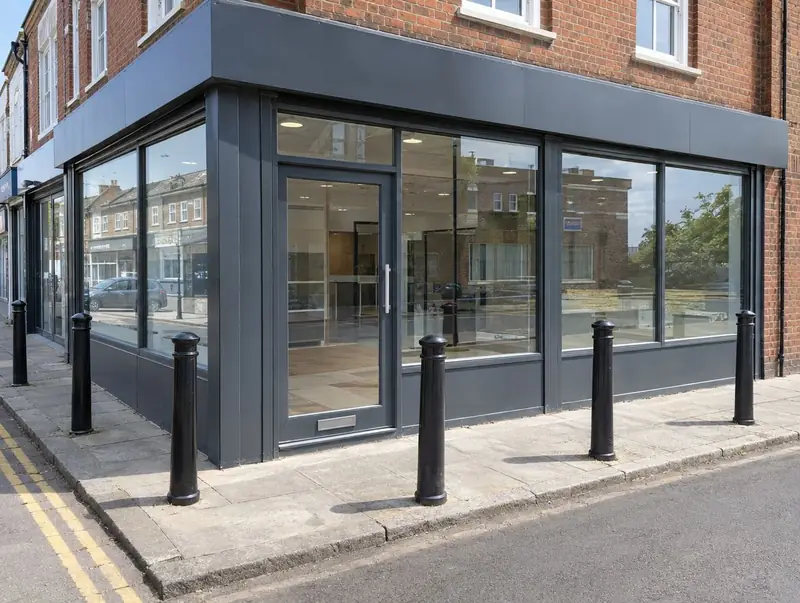
What is the price of anti-ram-raid glazing in Blyth?
Our guide range for anti-ram-raid glazing in Blyth is £1,495 to £6,995 plus VAT (£1,794 to £8,394 inc VAT) per shopfront, including fitting. The survey is free for new installations and your fixed price follows in writing.
Anti-ram-raid glazing is heavy laminated or anti-bandit glass fitted in strengthened, deeply rebated frames so that, if a vehicle or heavy tool hits the shopfront, the opening is not simply cleared. Glass and frames delay entry; stopping the vehicle itself needs bollards, posts or barriers in front of the shop.
Glass and fitting options
- Fixings designed back to the structure
- Anti-bandit glass in P6B to P8B classes
- Deep glazing rebates and bonded or mechanical glass retention
- Stallriser and threshold strengthening
- Manufacturer's test evidence supplied with your quote
- Advice on bollards and barriers, priced separately
Fitting in Blyth and nearby
From the NE24 district we also cover Ashington (4 miles) and Cramlington (4 miles). Survey dates depend on installer availability.
Northumberland is mostly rural, with stone market towns such as Hexham, Alnwick and Morpeth, former mining towns like Ashington and Blyth, and coastal villages open to North Sea winds.
This glazing suits:
- Phone, electronics and tobacco retailers
- Convenience stores with cash machines inside
- Shops on corners or with open forecourts
- Premises that have already been rammed
Questions we will ask at the survey
Stop the vehicle or delay entry
Bollards and barriers stop vehicles; glass and frames delay entry afterwards. Most sites need both, and we explain which layer does what.
Consent for bollards
Bollards on the public highway need the highway authority's agreement, and forecourt barriers may need planning permission.
Building regulations and safety in England
Planning permission
Changing the glass in an existing window or shopfront does not usually need planning permission, because the building looks much the same afterwards. A new or altered shopfront, or security features added to the outside of a building, may need planning permission from the council. Bollards or barriers on the pavement need the highway authority's consent, which is normally the council.
Glazing in workplaces
Regulation 14 of the Workplace (Health, Safety and Welfare) Regulations 1992 requires windows and transparent surfaces in walls, partitions, doors and gates to be of safety material or protected against breakage where health or safety makes that necessary, and to be marked so people notice them. The employer or the person in control of the premises decides what is needed through their risk assessment.
How it works
- Tell us about the glazing
- Survey, measuring and frame check
- Written quote naming the glass
- Fitting and handover
Anti-ram-raid glazing in Blyth: questions
Can you survey in Blyth and nearby towns?
Yes. Surveys in Blyth, Ashington and Cramlington are booked around installer availability.
Should I move stock away from the window?
Yes. Keeping high-value stock away from the glass at night reduces the reward and complements the physical measures.
Can glass stop a ram raid?
No. Glass cannot stop a vehicle. Strong laminated glass in a strengthened frame delays entry after impact; bollards or barriers are what stop the vehicle reaching the glass.
Do I need permission for bollards outside my shop?
Usually. Bollards on a public pavement need the highway authority's agreement, and forecourt barriers or new shopfront framing may need planning permission. We tell you what to check.
Anti-ram-raid glazing in nearby towns
- Ashington4 miles
- Cramlington4 miles
- Whitley Bay7 miles
- Morpeth8 miles
- North Shields8 miles
- Tynemouth8 miles
Other glazing in Blyth
- Laminated glass retrofit
- Broken glass replacement
- Toughened safety glass
- Laminated roof and conservatory glass
- Security double-glazed units
- Display case security glass
Get a guide price now and book your free survey in Blyth.