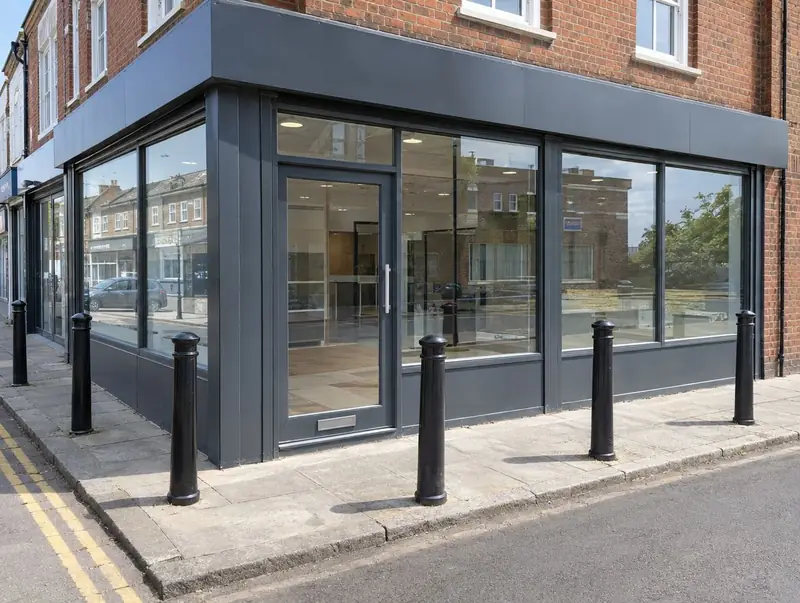
What is the price of anti-ram-raid glazing in Cambridgeshire?
Guide prices for anti-ram-raid glazing in Cambridgeshire are £1,495 to £6,995 plus VAT (£1,794 to £8,394 inc VAT) per shopfront for supply and fitting. We confirm a fixed price in writing after a free survey, before any glass is ordered.
Anti-ram-raid glazing is heavy laminated or anti-bandit glass fitted in strengthened, deeply rebated frames so that, if a vehicle or heavy tool hits the shopfront, the opening is not simply cleared. Glass and frames delay entry; stopping the vehicle itself needs bollards, posts or barriers in front of the shop.
Glass and fitting options
- Night-time stock layout advice
- Fixings designed back to the structure
- Anti-bandit glass in P6B to P8B classes
- Deep glazing rebates and bonded or mechanical glass retention
- Advice on bollards and barriers, priced separately
- Manufacturer's test evidence supplied with your quote
Covering Cambridgeshire
We can arrange surveys and fitting anywhere in Cambridgeshire, including Peterborough and Cambridge. Dates depend on installer availability. Choose your town below for local details.
Cambridgeshire has listed college streets and shopfronts in Cambridge and Ely, Peterborough's Victorian terraces and modern retail, and science-park offices with large glazed facades.
This glazing suits:
- Phone, electronics and tobacco retailers
- Convenience stores with cash machines inside
- Premises that have already been rammed
- Shops on corners or with open forecourts
Towns in Cambridgeshire
Questions we will ask at the survey
Consent for bollards
Bollards on the public highway need the highway authority's agreement, and forecourt barriers may need planning permission.
Stop the vehicle or delay entry
Bollards and barriers stop vehicles; glass and frames delay entry afterwards. Most sites need both, and we explain which layer does what.
Building regulations and safety in England
Listed buildings and conservation areas
In England, listed building consent from the council may be needed to replace historic glass such as crown or cylinder glass, or to alter glazing bars, sashes and frames. Historic England publishes guidance on traditional windows. Secondary glazing and window film are often easier to agree because they can be removed later, but the council's conservation officer makes the decision.
Glazing in workplaces
Regulation 14 of the Workplace (Health, Safety and Welfare) Regulations 1992 requires windows and transparent surfaces in walls, partitions, doors and gates to be of safety material or protected against breakage where health or safety makes that necessary, and to be marked so people notice them. The employer or the person in control of the premises decides what is needed through their risk assessment.
How it works
- Postcode and a few photos
- On-site survey
- Fixed written price and lead time
- Fit, check and explain
Anti-ram-raid glazing in Cambridgeshire: questions
Which towns in Cambridgeshire do you cover?
We can arrange work anywhere in Cambridgeshire, including Peterborough, Cambridge, Wisbech, St Neots and Huntingdon, and in other towns across the area.
Can you strengthen my existing shopfront?
Sometimes, with reinforced mullions and better glass retention, but many frontages need new framing to make the glass upgrade worthwhile.
Do I need permission for bollards outside my shop?
Usually. Bollards on a public pavement need the highway authority's agreement, and forecourt barriers or new shopfront framing may need planning permission. We tell you what to check.
What glass is used against ram raids?
Usually anti-bandit laminated glass in the P6B to P8B classes, held in deep-rebate, reinforced framing so the pane does not fall out when the frame is struck.
Other glazing in Cambridgeshire
- Security double-glazed units
- Misted unit replacement with laminated glass
- Security glazed doors and screens
- Laminated glass retrofit
- Security window film
- Counter and reception security screens
Start with a guide price online, then we survey and fix the price in writing.